Three questions to ask before buying a stake in a private company
The nature of the valuation, share transfer restrictions and the age of the last round: three questions to ask before buying a stake in a private company.
In-depth research, market analysis, and breaking news across venture capital, pre-IPO, and private market investments — built for forward-thinking investors.
The nature of the valuation, share transfer restrictions and the age of the last round: three questions to ask before buying a stake in a private company.
Crusoe will build its first Latin American AI cloud next to Paraguay's Itaipú dam, has a 12 MW hydro-powered site live in Norway and unveiled Spark Liquid modular data centers.
Let’s kick off the week with some figures on where money is currently flowing within the AI sector.
Last week, Hark—a deal we opened to our investors at the end of September—launched its first application for a general audience. Hark Pro is available for free on the web, iOS, and Android.
Johns Hopkins Medicine is launching a partnership with OpenEvidence focused on clinical practice and physician training, reports Fierce Healthcare.
Pre-money is a company's value before a round, post-money is its value after. Form Energy shows how to calculate stakes, dilution and compare rounds.
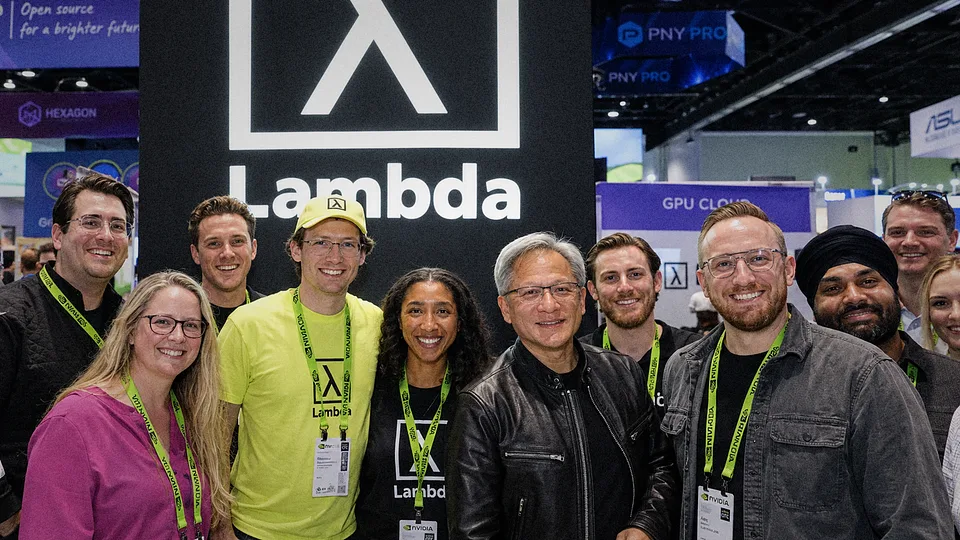
Lambda is negotiating up to $4 billion at a $14.5 billion pre-money valuation ahead of a 2027 IPO, after its backlog rose to $50 billion and a $1 billion GPU loan.
Some analytical information on external (non-portfolio) companies for our readers
Anthropic and OpenEvidence are set to provide doctors in approximately 100 low- and middle-income countries with free access to an AI-powered clinical decision support tool, Reuters reports. The list of countries incl...

Form Energy has secured a $270 million credit facility. Barclays structured the deal, with a syndicate comprising Citi, JPMorgan, Wells Fargo, Jefferies, RBC, Société Générale, and Stifel.
PwC, one of the world's "Big Four" audit firms, has published a forecast for AI infrastructure through 2050. Cumulative capital expenditure on data centers is estimated at $31.6 trillion, a figure that approaches $50 ...
In public markets, an investor at least sees the noise: candles, news, reports, the crowd’s reaction. In startups there is less noise — and that is exactly why silence can be confused with safety. A company may be gro...
Investors like simple answers: revenue is growing, so the company is expensive; the market is large, so the upside is huge. In startups, this logic breaks quickly. Two companies with the same revenue can be worth comp...
When public markets get nervous, an investor naturally wants to step away from the noise. Stocks move on rates, bonds argue with inflation, currencies live their own life — and against that backdrop, alternative inves...
Figure founder Brett Adcock's AI lab Hark is valued at $6 billion after a Series A of over $700 million. Who invested, what it has released and the risks.
Colombia’s financial regulator, the SFC, has granted Revolut an operating license—the final authorization needed for launch.
Perplexity is moving its entire model workflow to Crusoe Cloud
Get the latest venture capital and investment insights delivered to your inbox.