The IPO price is not determined in a vacuum: it is influenced by demand from institutional investors, the quality of roadshows, comparable companies and the general mood in the market. If it all adds up, the placement may come at a premium.
But there is another side to the price - it is important for the company not just to sell shares, but to lay the foundation for normal trading dynamics after listing. Too greedy pricing often damages the first day and the reputation of the deal.
It is useful for investors to understand that a high price at the start does not always mean the quality of the asset. In an IPO, it's not just the number that matters, but how it relates to future liquidity and growth.
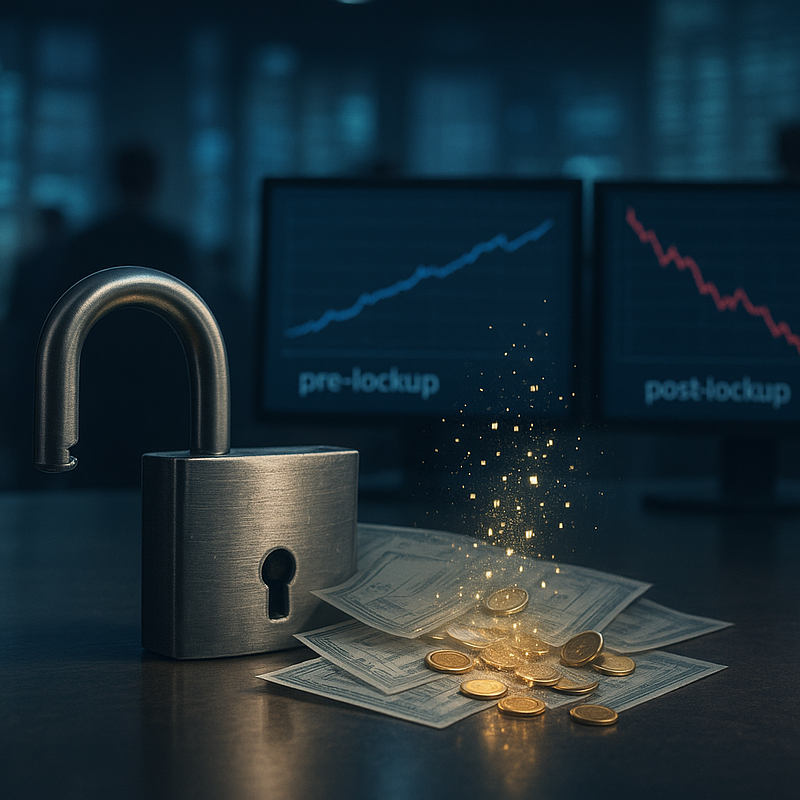
What happens to shares after the lock-up period. A lock-up is a period when early shareholders and insiders cannot freely sell their shares after an IPO. When it runs out, additional supply can enter the market, and this is what often changes the balance of supply and demand. It is important for an investor to understand not only the fact of a lock-up, but also what volume of securities may become available after its end.
Why lock-up affects the price. While securities are locked, float is limited and this supports the price if demand is strong. But after the end of the period, some holders may want to take profits, and this creates pressure on quotes. Therefore, the market very often includes in the price not only the fundamental, but also the expectation of a future supply shock.
What an investor should look for in advance. It is necessary to assess the size of the potential unlocked package, the composition of the holders, their motivation and the extent to which the company already has a positive or negative news background. If the lock-up ends at a time when the market doubts growth, the pressure on the price may increase. If the business is strong, the market often digests the unlocking without disaster.
How not to make mistakes in interpretation. Unblocking does not mean an automatic collapse, but it is always an event that must be taken into account. An investor's mistake is to look only at the date and ignore the context. Sometimes after a lock-up the price falls for a short time, but the fundamentals remain strong. Sometimes, on the contrary, the expectation of unlocking has long been included in the quote, and no drama occurs.
AMCH approach. We consider lock-up as part of the liquidity scenario, and not as a separate scary term. It is important to understand how many securities can come to the market, how strong the company is and what is the general demand for the asset. Then lock-up becomes not a surprise, but a controlled factor in the analysis.
Conclusion. After a lock-up, shares may behave differently, but the moment of unlocking itself should always be taken into account when assessing the risk. The investor wins when he understands in advance where additional supply may come from and how this will affect the price.