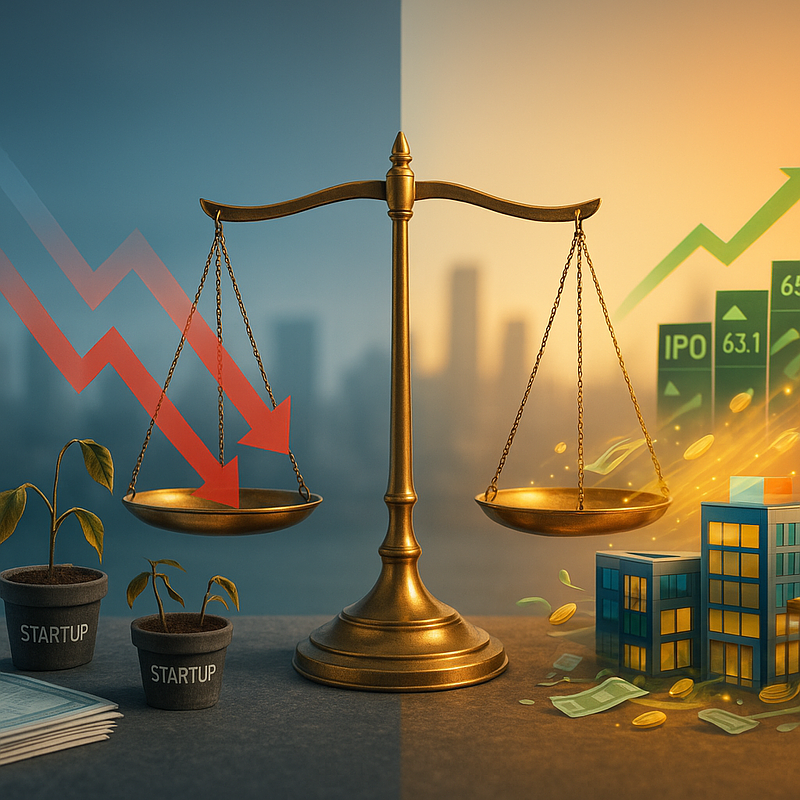
How interest rates affect IPOs, Pre-IPOs and venture deals
Interest rates are a basic metric of the economy. When rates rise, everything becomes more expensive: loans, capital, risks. When they fall, on the contrary, everything is cheaper.
Influence mechanics
1. Discounting future flows
Money today is worth more than money tomorrow. A high rate increases discounting, and companies' future profits are estimated lower.
2. Cost of Capital
The cost of debt increases in proportion to interest rates
The cost of equity is also growing (investors demand a larger risk premium)
WACC (Weighted Average Cost of Capital) is growing
IPO (Initial Public Offering)
For high stakes:
Investors are conservative: they prefer safe government bonds instead of risky stocks
IPO company valuations are lower (often below the range or at the lower end)
Fewer successful listings
Volatility on the exchange is higher
For low rates:
Money is cheap and looking for profitability
Higher IPO valuations
More successful exits to the stock exchange
Pre-IPO (additional issue before going public)
For high stakes:
Pre-IPO investments are less attractive (long horizon without liquidity)
Scores for rounds below
Fewer transactions overall
For low rates:
Pre-IPO is more active (investors want to “plant” money in companies that are preparing for an IPO)
Higher valuations (sometimes inflated, which leads to a collapse in the IPO)
Venture deals (early stages)
For high stakes:
Seed and Series A become riskier: horizons of 5-7 years with a high cost of capital
Burn rate becomes more critical: it’s expensive to “keep” a company on the runway
Fewer new deals, but more thorough Due Diligence
For low rates:
Money is looking for alpha: ventures are more active
More deals, but sometimes with inflated valuations
Historical examples
2022-2023: Fed rates increased from 0% to 5.25%. The IPO market froze, Pre-IPO transactions became more conservative.
2020-2021: rates around 0%. A record number of IPOs, but many companies collapsed on the stock exchange.
Output:
Interest rates are a fundamental factor. When rates are high, investors are conservative, valuations are lower, and there are fewer deals. At low levels, the opposite is true, but the risk of a bubble is higher.
For investors, this means: When rates fall, look more actively at Pre-IPOs and ventures, but be careful with inflated valuations. When rates rise, focus on quality deals with clear business models.
Action:
Keep an eye on Fed rates and adapt your strategy, but in general the private capital market is less volatile and more stable, stay tuned and subscribe to IPO news.